
TT HORIZONS
Reducing chemical leavening in industrial baking: a process control approach
A recipe that performs well does not always survive the transition to full-scale production. This gap is particularly visible in leavening reduction plans, where process variables that were masked by chemical activity become determinant at line speed.
Reducing leavening agents without compensating at the process level leads to volume loss, uneven crumb structure, and shelf-life instability. The recipe modification is rarely the limiting factor. The production system is.
What chemical leavening agents are compensating for
In liquid batter systems, chemical leavening agents do more than generate gas during baking: they act as a buffer for process variability by partially masking inconsistent aeration at mixing, unstable batter temperature at depositing and poorly calibrated thermal profiles in the oven.
Removing or reducing the leavening without addressing these variables could cause a visible instability in the final product. This is why reducing chemical leavening in industrial baking is a process engineering problem as much as a formulation one.
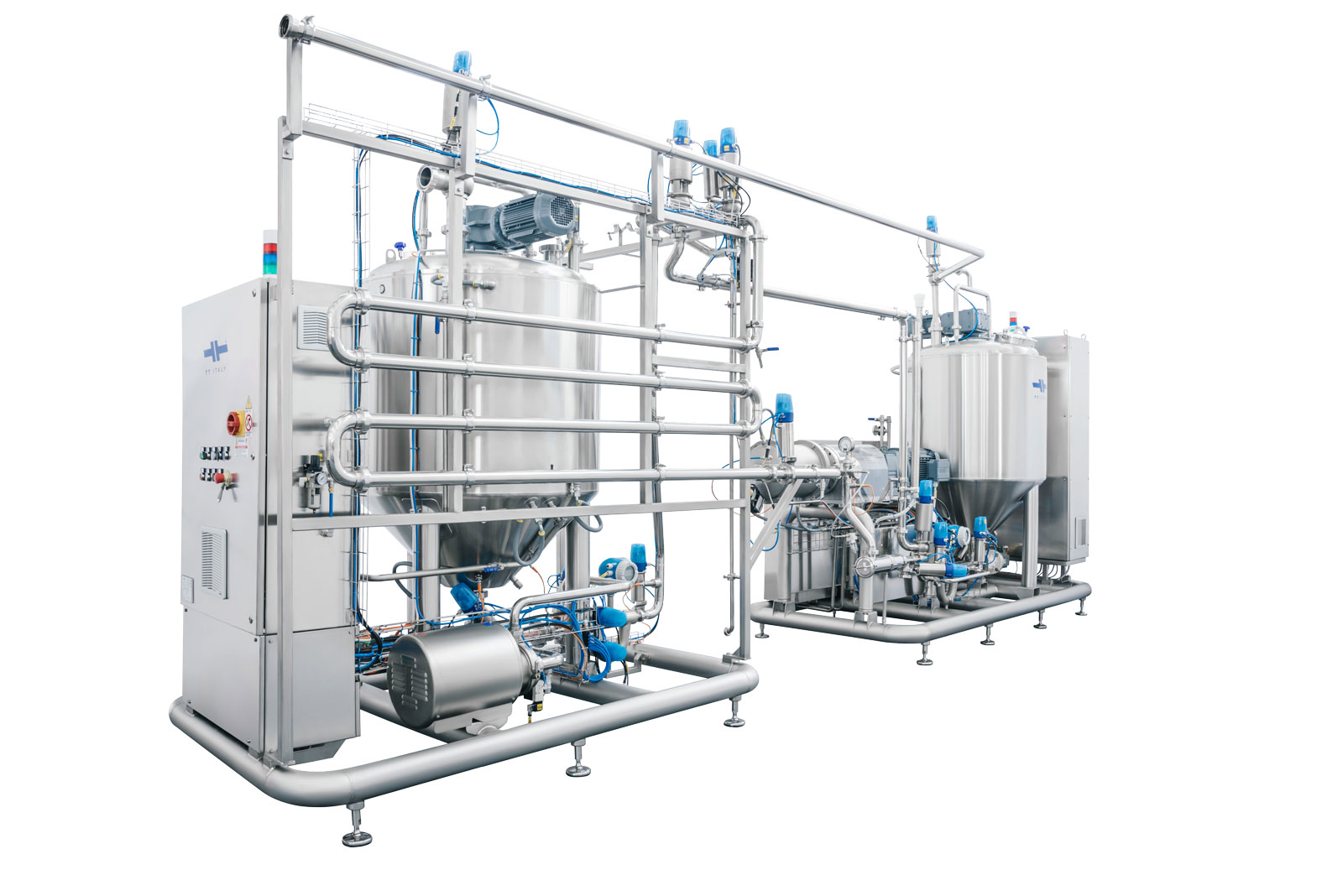
Three process variables that determine success in chemical leavening reduction
Mixing and specific gravity control
Aeration during mixing is the primary compensation mechanism for reduced leavening. Specific gravity - the key indicator of air incorporation in a batter - must be tightly controlled across every batch, not just monitored periodically. Mixing systems designed for continuous, repeatable air injection maintain the gas cell structure that the leavening would otherwise generate during baking.
Depositing precision
A correct specific gravity mixed batter can lose gas cell integrity before it reaches the oven. Depositing pressure, nozzle geometry, and belt speed affect how much aeration survives before the baking. In high-speed industrial lines, these are not marginal effects: depositing systems need to be configured around the specific rheological behavior of the reformulated batter, not simply adjusted from previous leavening parameters.
Thermal profiling and oven control
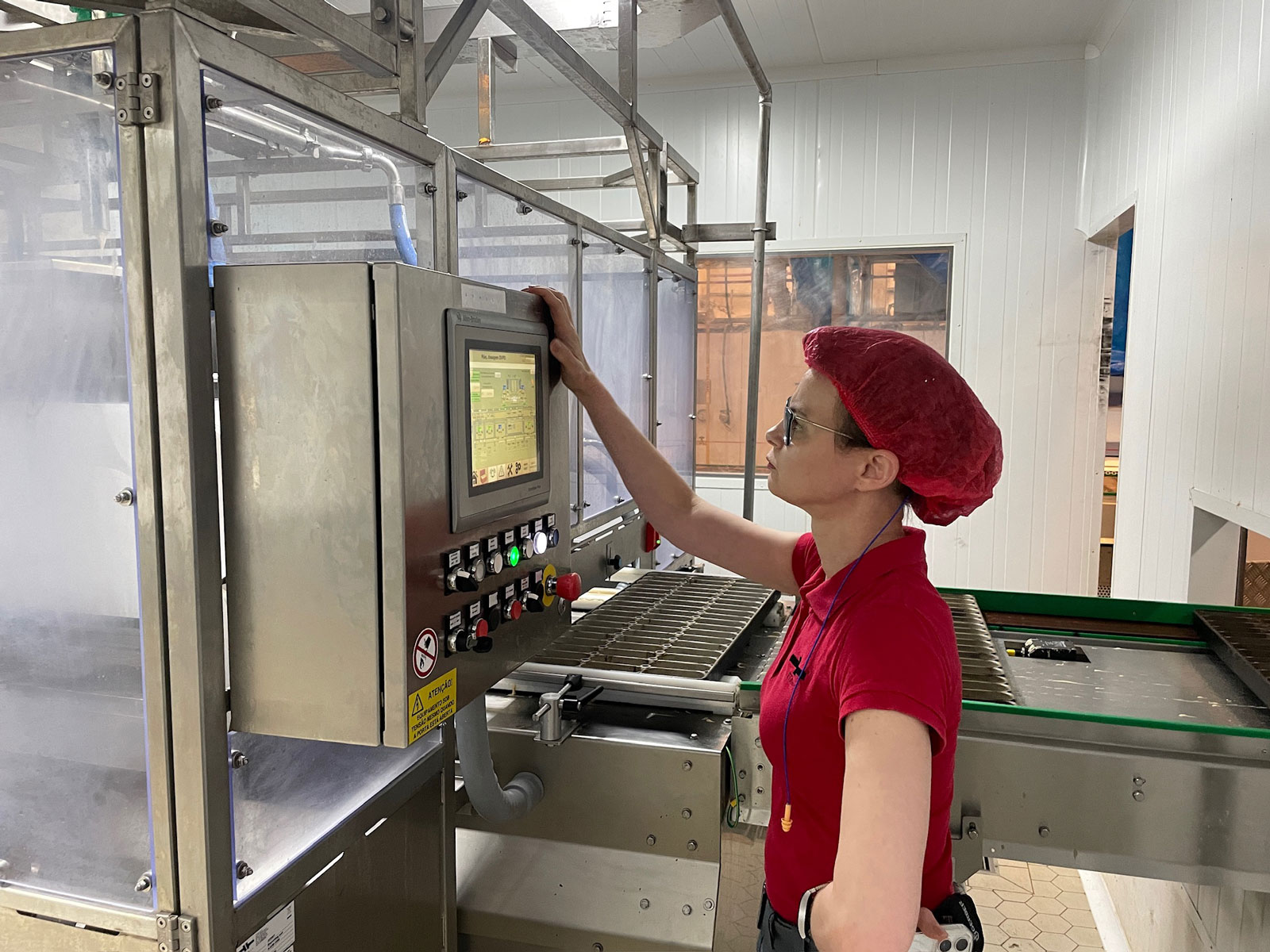
Chemical leavening generates gas across an extended range during baking. Reducing it would concentrate volume development in the early thermal phase, placing higher demand on heat flow control in the first baking zone. Airflow management, radiant heat balance, and belt speed must be recalibrated specifically for the new batter system. In the cyclothermic ovens used for sponge cake production, this calibration is product-specific and requires validation under real production conditions.
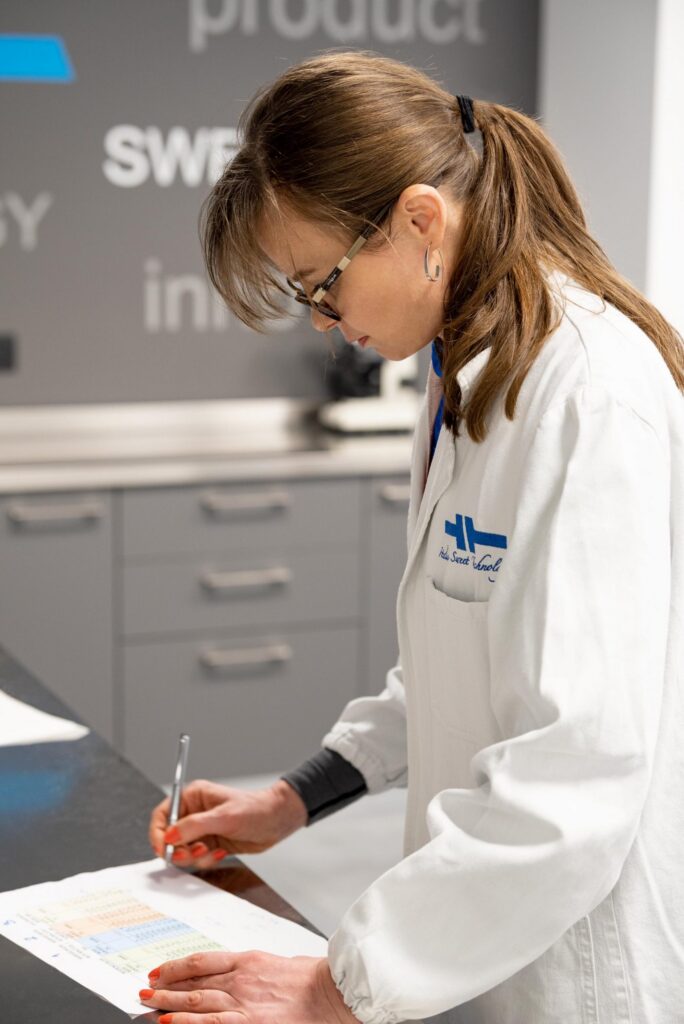
The formulation side: where food technology analysis comes in
Process control defines the production environment. Food technology analysis defines what the reformulated batter needs to do within the environment.
Chemical analysis of an existing product identifies how leavening reduction affects pH trajectory during baking, Maillard browning kinetics, crumb structure, and moisture retention. This analysis determines whether partial substitution with enzymes – amylases, lipases, or oxidoreductases – can stabilize crumb texture and delay staling without introducing rheological complexity that the depositing system cannot handle.
Without this upstream analytical work, process adjustments are made against an undefined target. Development cycles lengthen, and the risk of reformulation iterations after line commissioning increases significantly.
An integrated path from lab to production
The most effective leavening reduction programs develop formulation and process parameters in parallel, not sequentially. Testing under real industrial conditions validates whether the process control strategy delivers the target specific gravity, volume, texture, and shelf-life before full production scale-up.
This integration between food technology analysis and bakery line engineering is what TT LAB was designed to support. With dedicated testing facilities and food technologists with direct experience in industrial cake production, TT LAB works alongside manufacturers from the earliest stages of reformulation through the line commissioning, reducing development risk and shortening time to market.
Frequently Asked Questions
1. Why is it difficult to reduce chemical leavening in industrial cake production?
Chemical leavening agents do not only generate gas; they compensate for process variability in mixing, depositing and baking. Removing them without addressing these variables exposes inconsistencies that were previously masked, leading to texture, volume and shelf-life issues.
2. What process controls are needed to reduce leavening agents in batter-based cakes?
The three critical variables are: specific gravity management during mixing, depositing system configuration matched to the reformulated batter’s rheology, and thermal profiling of the oven’s early baking zone. Each must be calibrated specifically for the reduced-leavening batter system.
3. At what stage should food technology analysis be integrated into a leavening reduction program?
From the earliest stage of reformulation, before process adjustments are made. Upstream analytical work defines the boundaries within which process control can operate, reducing development risk and avoiding reformulation iterations after line commissioning.
Looking to develop a tailor-made bakery line?
If you are reformulating an existing recipe or designing a new clean-label product, aligning process control with food technology analysis can make the difference between a stable production outcome and a extended development cycle.
Contact us to discuss your industrial bakery project and discover how TT LAB can support your reformulation program from batter analysis through the line commissioning.